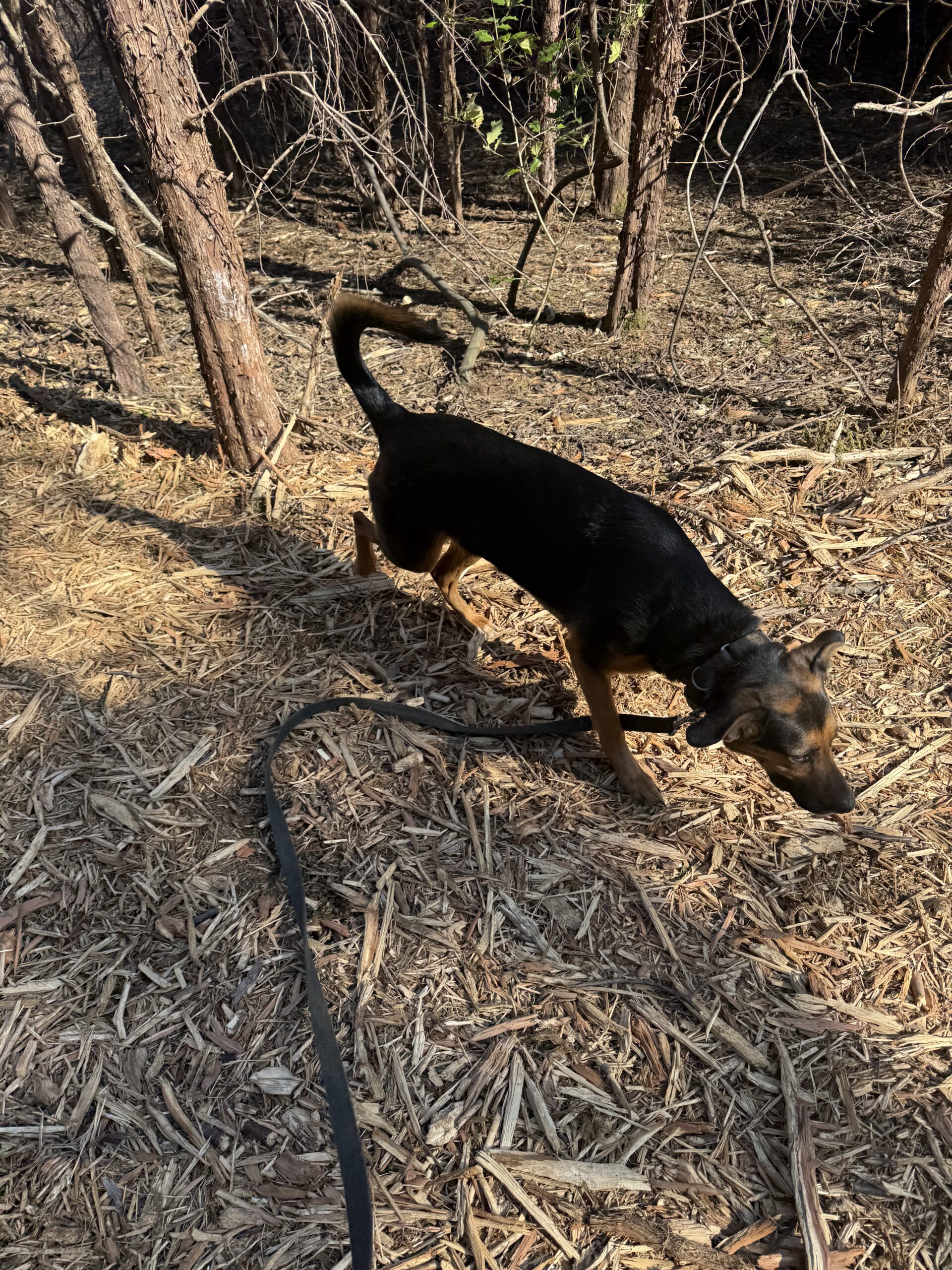
If you have a reactive dog, finding someone you trust to walk them can be a little more complicated than searching for a dog walker near you and handing over the leash.
You may have a dog who barks when another dog appears around the corner. Maybe they lunge at bicycles, become overwhelmed around strangers, fixate on wildlife, or need significantly more space than the average dog. You may even have been turned away by dog-walking services because your dog isn’t considered “easy.”
At Rustic Paw Adventures, I welcome reactive dogs.
I provide solo dog walking in North Garden, Charlottesville, Esmont, Keene, Scottsville, and surrounding areas of Central Virginia, and I’m comfortable working with dogs who need a little more awareness, patience, and space during their walks.
That doesn’t mean every reactive dog is automatically a good fit. Safety still matters, which is one of the reasons I require a Meet & Greet before services begin. But reactivity itself isn’t a reason I’ll immediately say no.
What Does It Mean When a Dog Is Reactive?
“Reactive” covers a pretty broad spectrum.
A reactive dog may bark, growl, lunge, pull, freeze, stare, become overly excited, or try to create distance when faced with a particular trigger. Common triggers can include other dogs, unfamiliar people, bicycles, runners, vehicles, wildlife, loud noises, or certain environments.
And reactive does not automatically mean aggressive.
Sometimes a reaction comes from fear. Sometimes it’s frustration or overstimulation. Sometimes a dog has had a bad experience. And sometimes we don’t know exactly why a dog responds the way they do.
For me, the important part isn’t sticking a label on the dog. It’s knowing what makes that particular dog uncomfortable and what I can do to make their walk safer and less stressful.
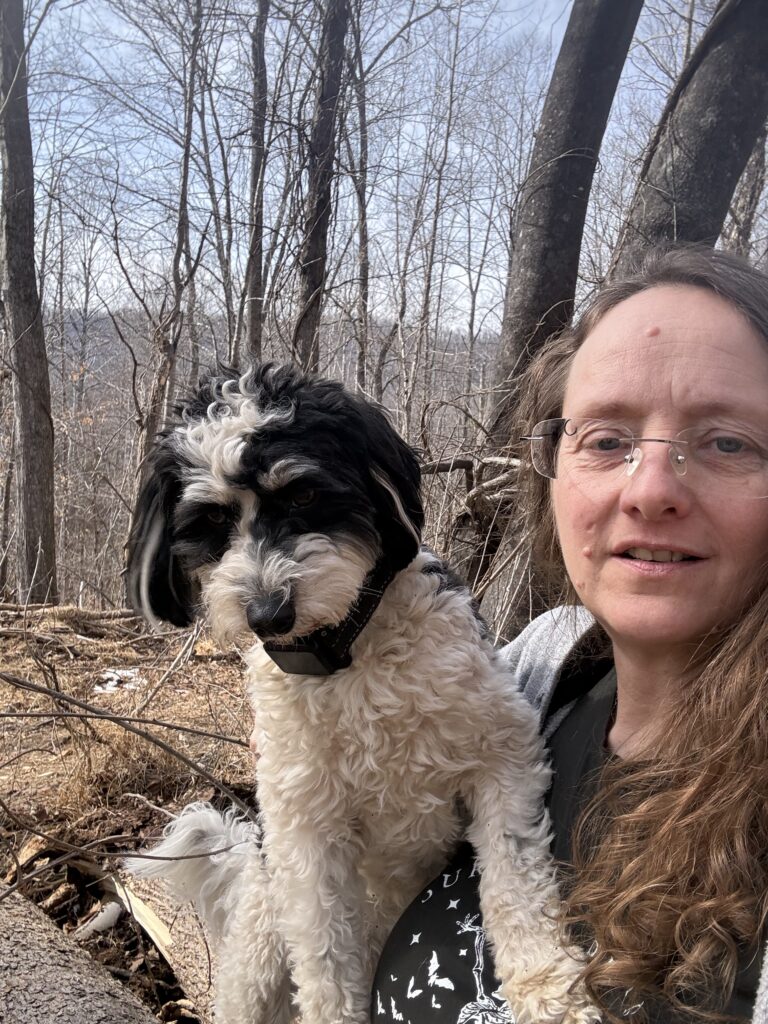
Reactive Dogs Don’t Need to Be “Fixed” During Their Walk
I’m a professional dog walker, not a dog trainer or veterinary behaviorist.
When I’m walking your dog, my job isn’t to diagnose their behavior or promise that I’ll eliminate their reactivity. My job is to provide safe, appropriate exercise and enrichment while respecting the information you’ve given me about your dog.
That can mean adjusting the route, creating more distance from a trigger, turning around, crossing the street, waiting for another dog to pass, or deciding that today’s walk needs to be quieter than originally planned.
I don’t consider any of those things a failure.
If we planned a three-mile adventure and your dog tells me after the first mile that the world is simply too damn much today, I’m going to listen to the dog rather than the mileage.
What Walking a Reactive Dog Actually Looks Like
One of the biggest differences is that I’m paying attention to much more than where we’re going.
I’m watching your dog and what’s happening around us.
If another dog is approaching, I don’t need to wait until your dog is barking at the end of the leash before doing something. If I know dogs are a trigger, I’m already looking for ways to give your dog more room.
That might mean crossing the road. It might mean changing direction. On a trail, it could mean moving far enough off to the side to let another hiker and dog pass comfortably.
And yes, occasionally it means abandoning the route entirely.
The route isn’t more important than the dog.
Solo Dog Walks Can Be a Great Fit for Reactive Dogs
Rustic Paw Adventures focuses on solo dog walks rather than group dog walking, which can be particularly helpful for reactive, anxious, selective, or easily overstimulated dogs.
Your dog isn’t being loaded into a vehicle with several unfamiliar dogs or expected to keep pace with a pack.
Instead, the walk can be tailored to your dog’s individual pace, personality, comfort level, and needs.
Some dogs want to cover ground. Others need time to sniff every third blade of grass because apparently that particular blade contains breaking neighborhood news.
Both can have a good walk.
For a reactive dog, removing the pressure of navigating a group can also make it much easier to manage their environment and give them space when they need it.
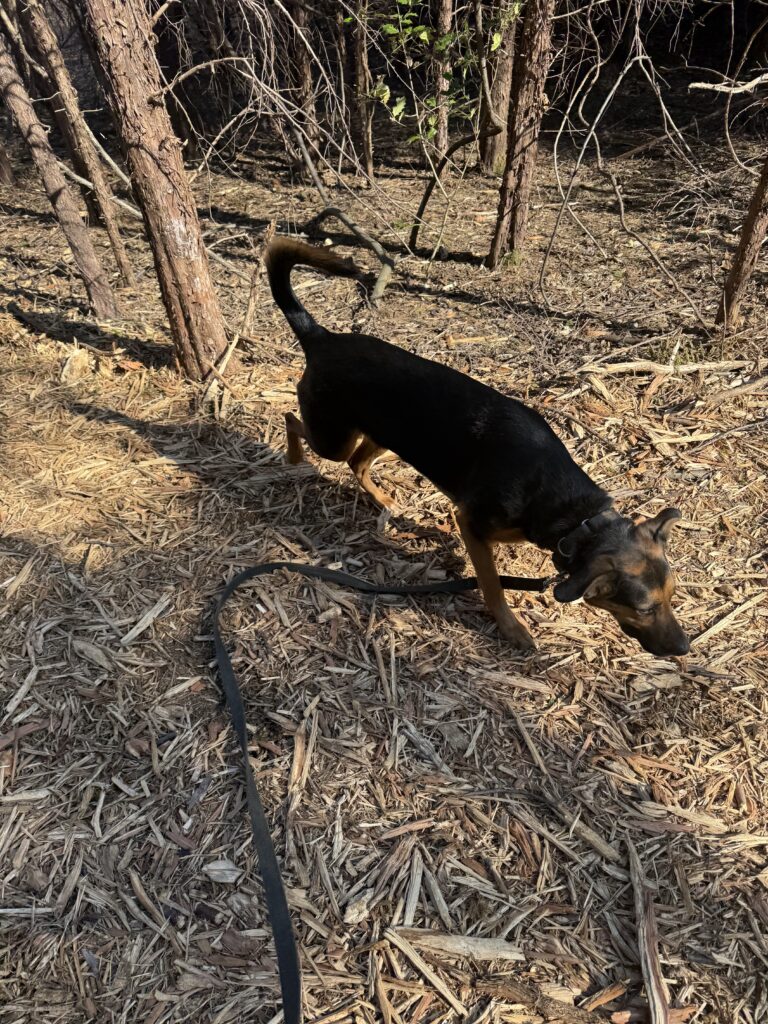
Sometimes the Best Walk Is the Quiet One
More exercise isn’t automatically better.
For some reactive dogs, a busy hour-long walk filled with triggers may leave them far more stressed than a quiet 30-minute walk where they can sniff, explore, move their body, and actually enjoy themselves.
That’s why I don’t judge the quality of a walk purely by distance.
Sniffing is part of the walk. Exploring is part of the walk. Standing there investigating one incredibly fascinating shrub is part of the walk.
Especially with reactive dogs, a successful walk isn’t necessarily the one where we traveled the farthest. It’s the one that met that dog’s needs that day.
What I Need to Know About Your Reactive Dog
This is also why honesty during your Meet & Greet is incredibly important.
Please don’t minimize your dog’s behavior because you’re afraid I’ll judge them or refuse to walk them.
I’d much rather hear “She loses her mind when she sees a bicycle” than discover that when a cyclist comes flying around a corner.
Tell me what you know.
What are your dog’s triggers? How much distance do they typically need? Are there certain streets or areas you avoid? How do they respond to unfamiliar dogs? People? Children? Wildlife? Vehicles? What equipment do you normally use? Are they an escape risk? Are there cues that help them disengage or move away?
And just as importantly, what doesn’t work?
The more I know about your dog before we head out together, the better I can plan their walks.
Your Reactive Dog Still Deserves Adventure
There can be a lot of embarrassment wrapped up in having a reactive dog, especially when you’re constantly comparing them to dogs who seem able to stroll through a crowded park without caring about anything.
But your dog doesn’t have to love every person, greet every dog, or handle every environment to enjoy getting outside.
Some dogs need more space.
Some need quieter routes.
Some need someone to hold the leash who isn’t bothered by turning around when another dog just appeared up ahead.
That’s okay.
At Rustic Paw Adventures, dog walking isn’t about forcing every dog into the same experience. It’s about figuring out what kind of experience works for the dog actually standing at the other end of the leash.
Looking for a Dog Walker for Your Reactive Dog in Central Virginia?
Rustic Paw Adventures offers 30- and 60-minute solo dog walks for dogs in North Garden, Charlottesville, Esmont, Keene, Scottsville, and nearby Central Virginia communities.
Reactive dogs are welcome to inquire.
Every new client starts with a Meet & Greet so I can get to know you and your dog, learn about their routine and triggers, review their walking equipment, and determine whether we’re a safe fit for each other.
Because your dog doesn’t need to be everybody’s best friend to deserve a damn good walk.
Ready to talk about walking services? Contact Rustic Paw Adventures to schedule a Meet & Greet.